
Last updated November 24, 2026
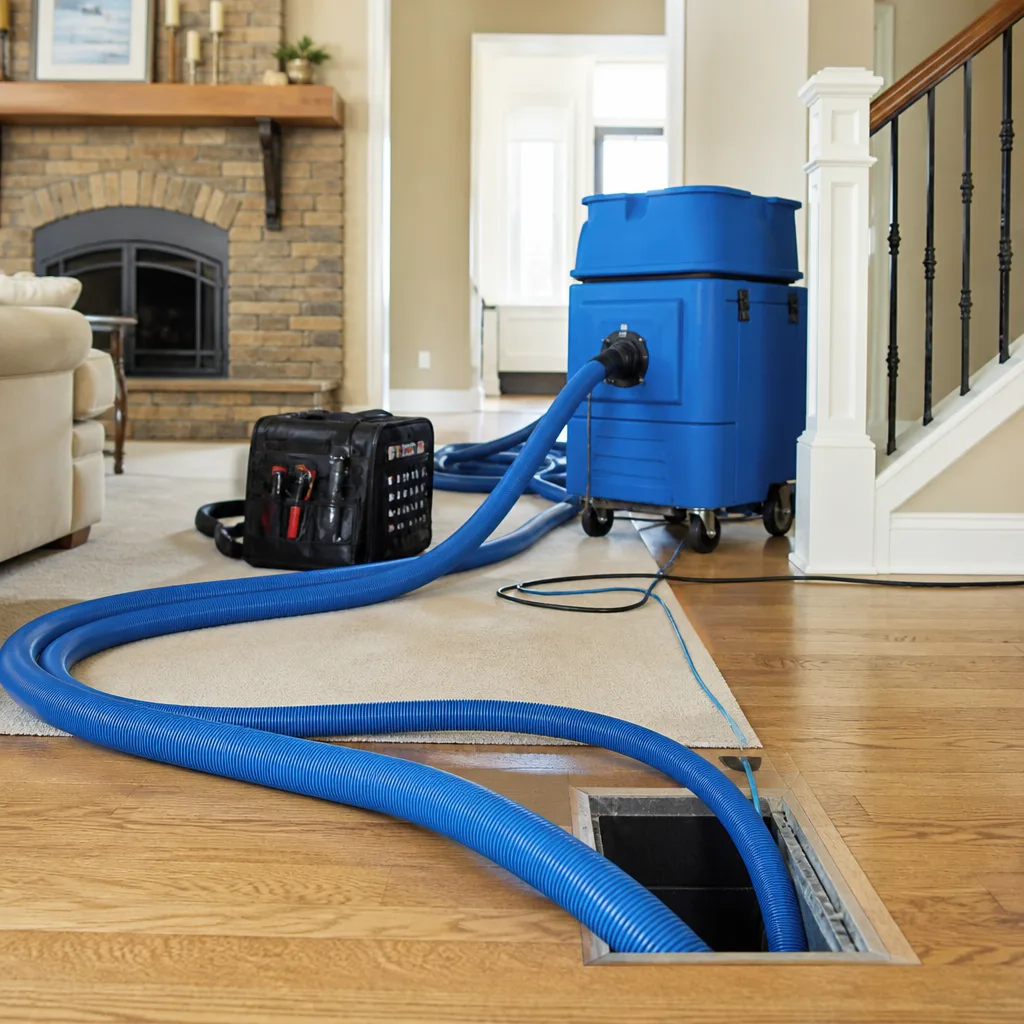 Whole-home duct cleaning
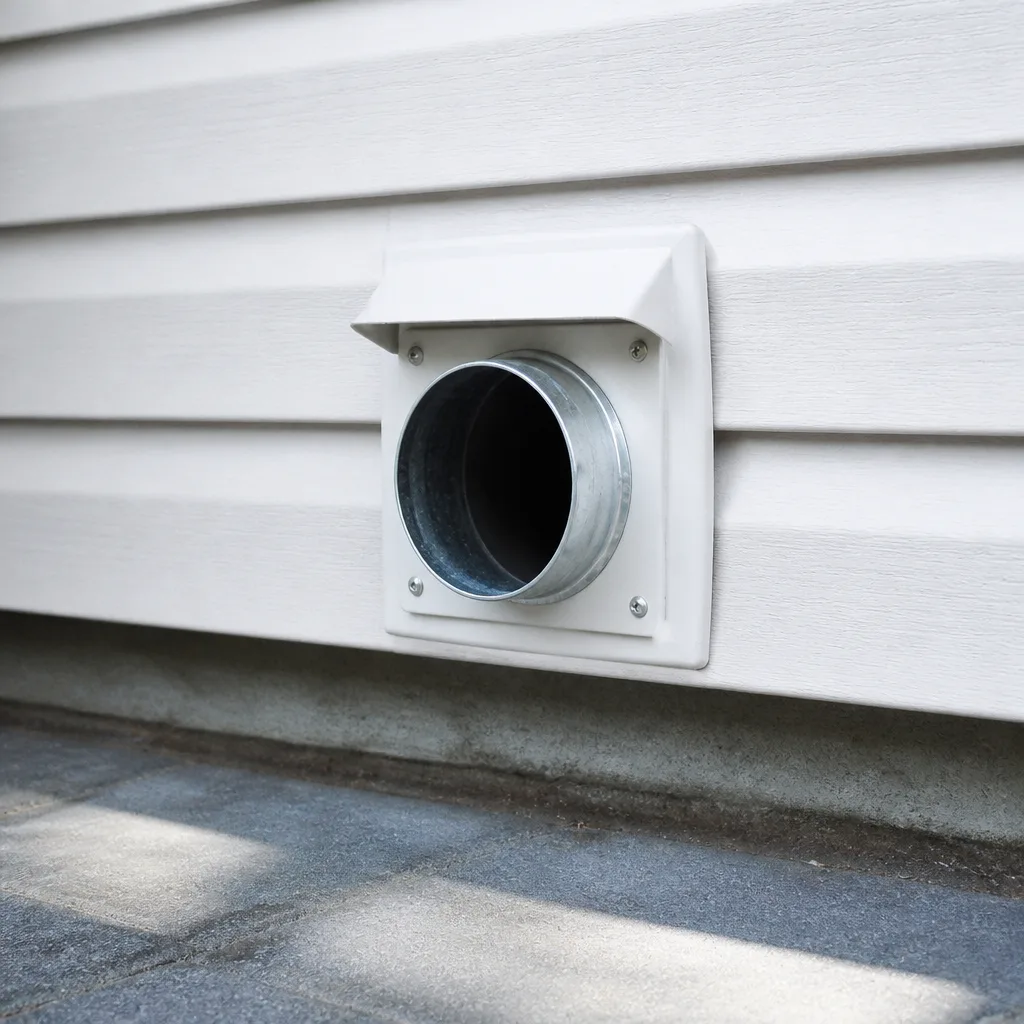 Dryer vent cleaning
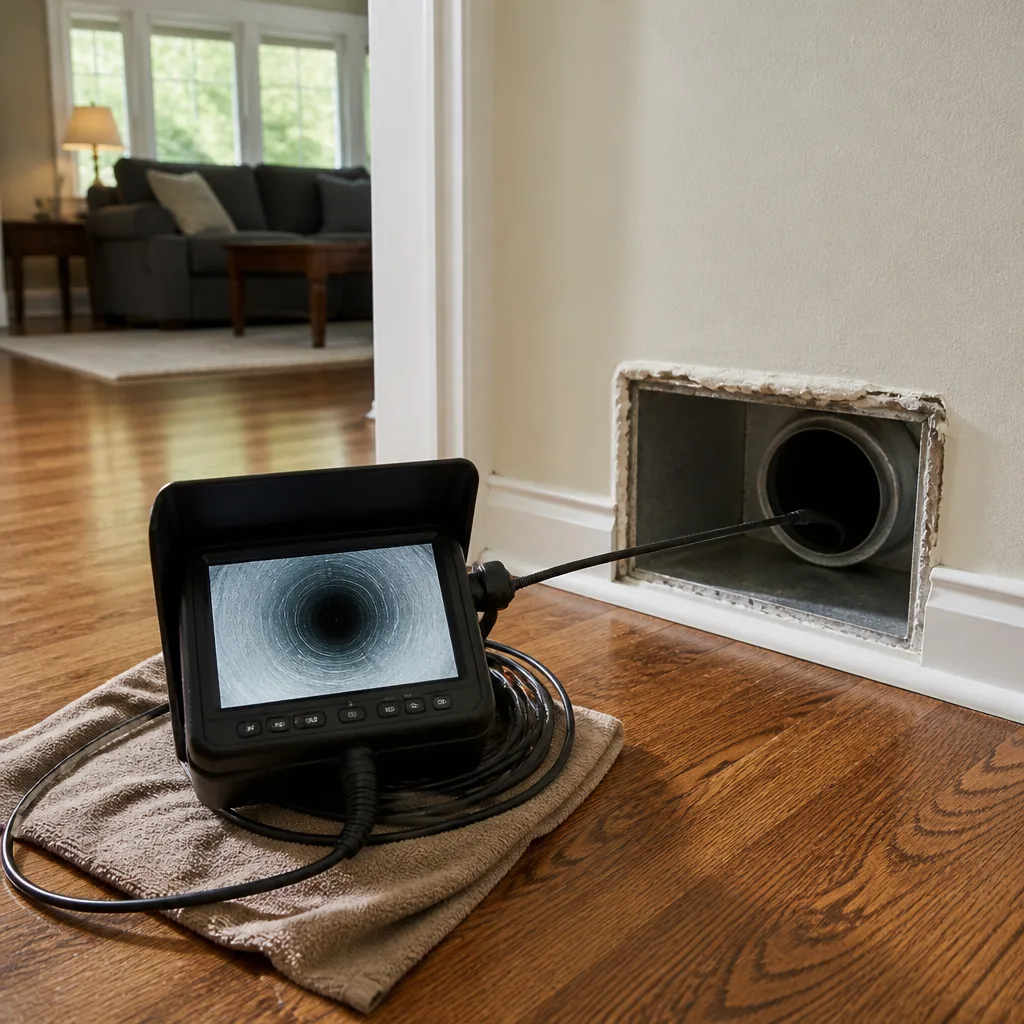 Camera inspection
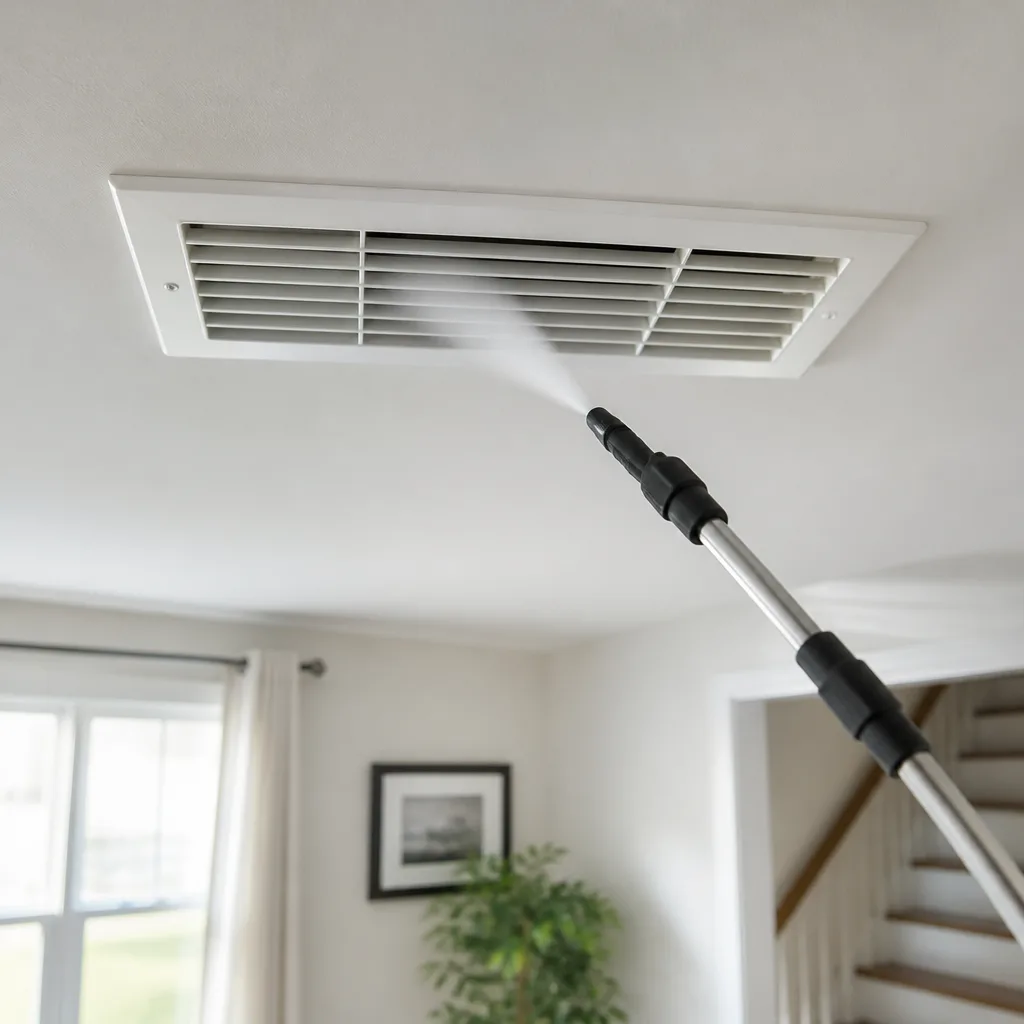 Sanitizing & deodorizing
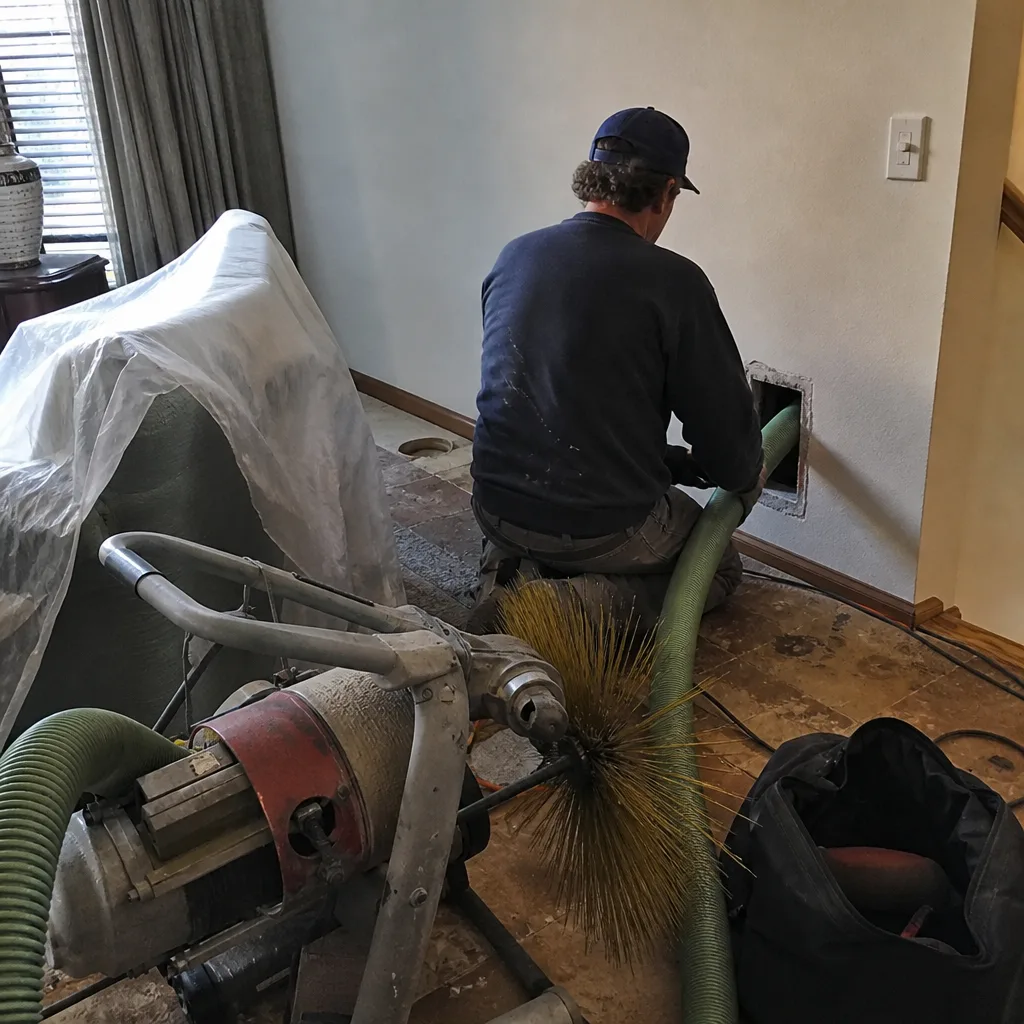
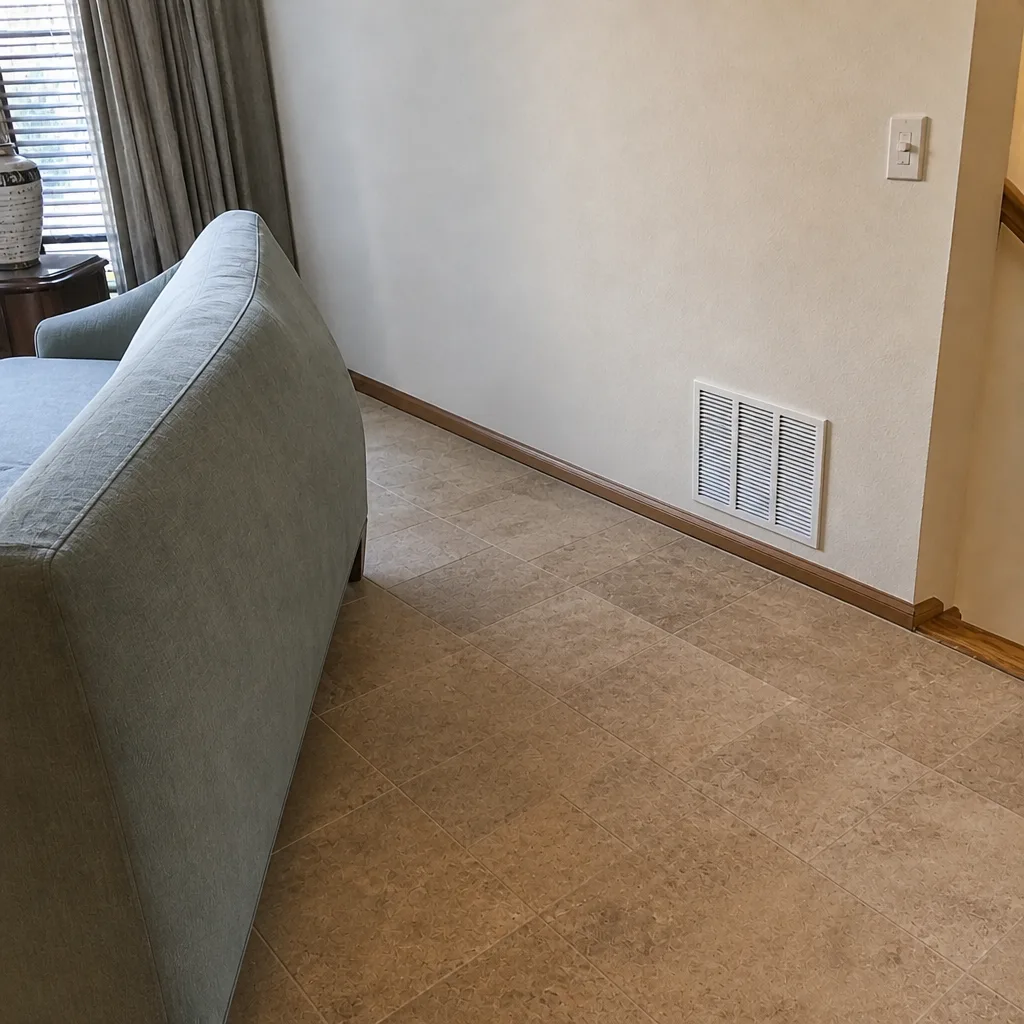
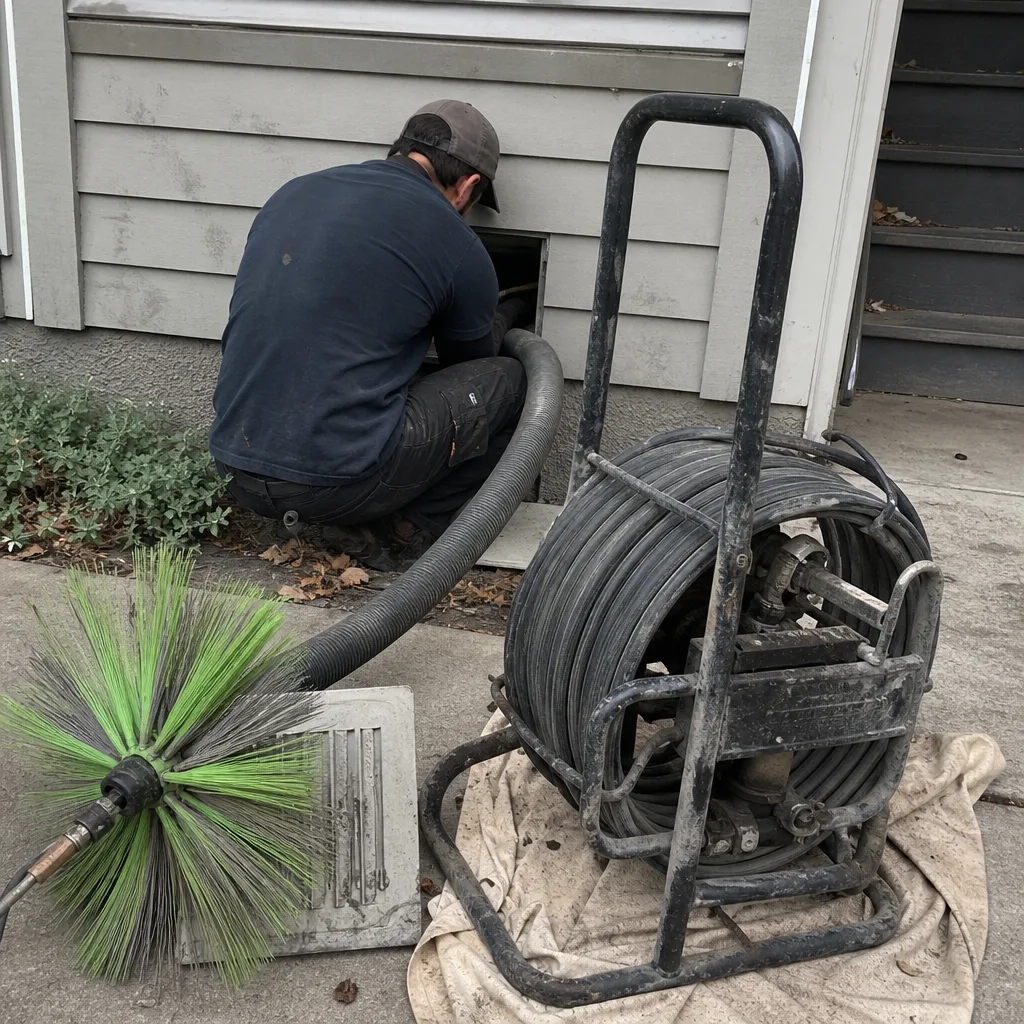
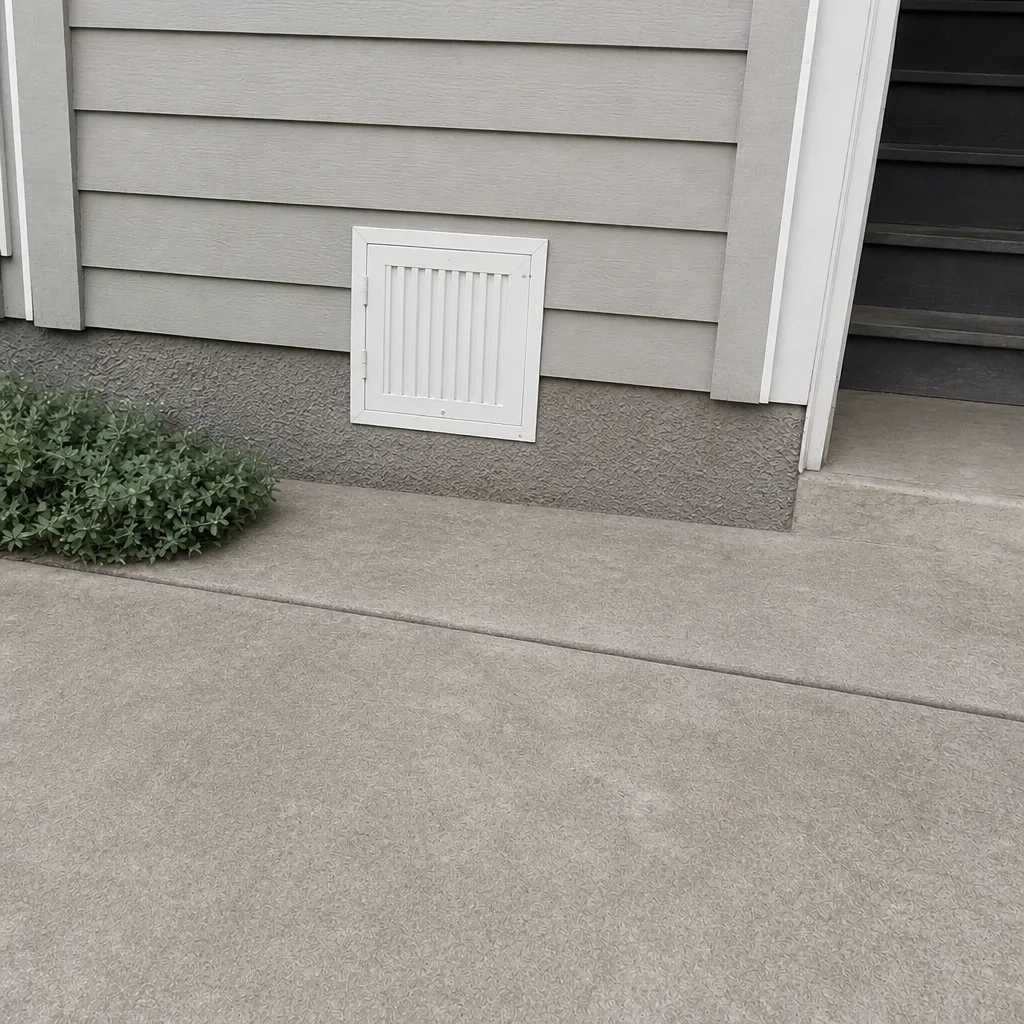
Whole-system duct and dryer vent check with before-and-after photos - you see exactly what came out of your vents
That "$99 whole-house special" is a bait ad - the real number appears once they are in your hallway, or the "clean" is a shop-vac at the register. We photograph the inside of your ducts before and after instead.
Air Duct Cleaning Emergency Preparedness Guide for University Park Homes
Most homeowners think emergency duct work starts the day after a fire, a flood, or a smoke event rolls through. It doesn’t. It starts months before, when you know what your system looks like on paper, which contamination scenarios actually require immediate intervention, and who you’d call if the call became necessary. The 2020 Colorado wildfires proved the point across the Front Range: a surge of “smoke remediation” duct cleaning followed, and much of it was under-equipped contractors charging premium prices for a blower-vacuum pass that never touched the ultrafine particulate embedded in the system. This guide is how University Park homeowners learn the difference before they need it.
Quick Answer
Emergency duct preparedness in University Park means three things: knowing which four contamination events demand immediate system response (wildfire smoke, water intrusion, fire soot, rodent discovery), documenting your system and baseline air quality before anything happens, and pre-vetting a contractor whose equipment can actually handle ultrafine particulate and microbial contamination, not just visible dust. Cleaning after the event is the easy part. Knowing what “clean” requires for that specific event is where most homeowners get taken.
Styles & brands we work with
- Whole-home duct cleaning
- Dryer vent cleaning
- Camera inspection
- Sanitizing & deodorizing
Table of Contents
- The Four Emergency Scenarios That Require Immediate Duct System Response
- Why Each Emergency Type Requires a Different Remediation Protocol
- What to Do in the First 24 – 48 Hours After a Contamination Event
- How to Tell a Legitimate Emergency IAQ Contractor From a Storm-Chaser
- Pre-Event Preparedness: What University Park Homeowners Can Do Now
- The Equipment Standard That Separates Real Remediation From a Vacuum Pass
- Why University Park’s Housing Stock and Climate Change the Equation
- Documentation Standards Every Legitimate Job Should Meet
The Four Emergency Scenarios That Require Immediate Duct System Response
Not every contamination event is an emergency for your ducts. A dusty kitchen renovation is annoying, not urgent. But four specific scenarios create conditions inside your ductwork that get measurably worse with time, and those four are the ones worth preparing for.
Wildfire smoke infiltration. When smoke from a Front Range fire pushes into University Park, the particles that matter are the ones you can’t see. Ultrafine particulate in the 0.1 – 1 micron range passes through standard HVAC filters and lodges in duct lining, plenum surfaces, and the interior walls of flexible duct runs. It doesn’t blow back out on its own. It stays, and it re-enters the airstream every cycle.
Flood and moisture intrusion. Any water that reaches ductwork, usually through a basement flood, a failed sump, or a roof breach, creates a microbial problem within days. Wet fiberglass duct liner and unsealed flex duct become growth surfaces. This is a different job entirely from smoke, and treating it as one is a common and expensive mistake.
Fire and soot contamination. Even a contained kitchen fire or a fire in an adjacent unit pushes soot into the return system. Soot is acidic, it’s oily, and it bonds to duct surfaces. Dry vacuuming alone smears it rather than removing it.
Rodent infestation discovery. Rodent activity in ducts means droppings, urine, nesting material, and airborne pathogen risk. This is a public health issue, not a housekeeping one, and it needs remediation-grade containment and sanitizing, not a shop vacuum.
Each of those four is worth a same-day decision about shutting the system down. None of them get better on their own.
Why Each Emergency Type Requires a Different Remediation Protocol
Here’s where the industry loses a lot of homeowners: they get sold one generic “deep clean” for four completely different problems. A fire soot job and a flood job are not the same procedure, and a company that quotes them the same way is telling you something about what they know.
Wildfire smoke is a particulate and residue problem
Smoke remediation requires contact cleaning of duct surfaces, not just negative-pressure extraction. Professional tools like the Nikro line and Rotobrush contact-cleaning systems are built to physically agitate and remove bonded residue from duct walls. If a contractor is only running a vacuum at the register, smoke residue stays in the lining. For homes with significant infiltration, remediation-grade filtration equipment like Abatement Technologies air scrubbers belongs in the process, not just a standard shop vac.
Water intrusion is a microbial problem
Moisture in ducts means you’re dealing with growth, and the priority is containment and removal of contaminated material, not just cleaning it dry. Porous duct components that got wet usually come out rather than get cleaned. The sanitizing step matters here, and it should be a real antimicrobial treatment, not a fragrance spray.
Fire soot is a chemical and bonding problem
Soot needs chemical agitation plus HEPA-level capture. The cleaning order matters: dry soot removal first, then wet cleaning of the residue, then sanitizing. Skip the chemical step and you push acidic residue deeper into the system.
Rodent contamination is a containment problem
The entire job happens under negative pressure with proper PPE. Droppings and nesting material get removed as hazardous material. Sanitizing is mandatory, and re-entry points need sealing or the problem returns within weeks. Sanitizing with a residual treatment like Guardsman products is worth asking about, since it keeps working after the crew leaves.
If you’re not sure which scenario you’re dealing with, the safe answer is: shut the system down and get a professional assessment before you run it again.
What to Do in the First 24 – 48 Hours After a Contamination Event
The first day or two after a smoke event, a flood, or a rodent discovery is when you either protect your system or make the eventual remediation harder. Here’s the order of operations, before any contractor arrives.
- Shut the system down if the contamination source is airborne or wet. Smoke, soot, and rodent contamination mean the system should not be circulating air through the house. Turn the thermostat to off. For water intrusion, shut the system down immediately to avoid pulling moisture through the ducts.
- Document everything with photos and video. Photograph visible soot, water lines, droppings, and any duct openings you can safely access. Note the date and time of the event. This documentation matters for insurance and it matters for scope verification when you get an estimate.
- Do not run the system “to see if it helps.” This is the single most common mistake. Running the system after a smoke or rodent event redistributes contaminants into every room the ducts serve.
- Change the HVAC filter, then don’t run the system. A fresh filter captures what’s in the air but does nothing for what’s already in the ducts. Change it anyway so the eventual restart starts clean.
- Keep windows closed if the outdoor air is still contaminated. During a Front Range smoke event, outdoor air can be worse than indoor air. Check local air quality before deciding whether to ventilate.
- Call for an assessment, not a cleaning quote over the phone. A legitimate contractor wants to see the system, the extent of contamination, and the duct type before giving you a range.
If the event happened overnight or on a Saturday, the phone line is still the right first call. We answer 24/7, and a call outside dispatch hours is booked into the next opening, Sunday through Friday, 7am to 7pm. What you don’t want to do is wait a week to make the call while contaminants settle deeper.
How to Tell a Legitimate Emergency IAQ Contractor From a Storm-Chaser
After every large-scale Front Range event, the market fills with operators who arrive from out of state, rent equipment, and quote prices that don’t match the scope of work. University Park homeowners with older homes and complex duct systems are a favorite target, because a quick visual inspection can’t verify what was or wasn’t done inside the ducts.
Here’s what separates a real remediation contractor from a storm-chaser:
- They ask about the contamination type before quoting. A legitimate contractor wants to know whether you had smoke, water, soot, or rodents. A generic “we do all duct cleaning” quote means they’re not going to change the protocol based on the problem.
- They name their equipment. Ask specifically what vacuum and agitation tools they use. Professional remediation work uses equipment like Rotobrush contact-cleaning systems and Nikro tools, not a shop vacuum and a drill brush. For contamination jobs, ask whether they carry air scrubbing equipment like Abatement Technologies units. If they can’t answer, they don’t have it.
- They offer before-and-after photos of your system. This is not a courtesy, it’s proof of work. A contractor who cleans genuine contamination photographs the inside of the duct before and after, and shows you the images alongside the written scope.
- They give you one flat price per system, in writing, before work starts. That’s the standard. If the quote is per-vent, if it changes after the tech is on site, or if there’s a coupon price that “becomes” a larger invoice once they’ve opened a register, walk away.
- They’re licensed and insured as required by the state. Ask for documentation and don’t accept a verbal assurance.
- They’ll give you a written scope that names the contamination type and the treatment for it. Smoke, water, soot, and rodents each get a different scope. If the scope doesn’t say which one, it’s not a scope.
The estimate itself should be free, and the price should be set per job by the written estimate. Any contractor who won’t put that in writing isn’t prepared for a real remediation job.
Pre-Event Preparedness: What University Park Homeowners Can Do Now
Preparedness is cheap and calm. Emergency response is neither. The window between “everything is fine” and “the system is contaminated” is the only time you can make good decisions without pressure. Use it.
Document your system. Photograph your furnace and air handler, your duct layout if accessible, and the make and model of your HVAC filter. Note the duct types (flex, rigid, or a mix) and rough footage if you can get it. Store this in your phone or a cloud folder. A contractor on the phone can give you a much better preliminary read when you can tell them what you have.
Get a baseline IAQ reading. A pre-event air quality assessment gives you a starting point. When something happens, “the air quality got worse” is not a measurement, but a comparison to a baseline is. Homes with allergy or asthma concerns in University Park get real value from knowing what their “normal” looks like.
Pre-vet a contractor before you need one. Interview a duct cleaning company now, when there’s no time pressure. Ask about equipment, ask about contamination protocols, and ask whether they handle dryer vent cleaning as a standalone service. The answer tells you whether they understand fire-risk adjacent systems, not just HVAC ducts.
Know your system’s shutdown sequence. Find the thermostat’s off switch and know where your furnace breaker is. If you ever have to shut down fast, you don’t want to be reading a panel in the dark.
Address any existing duct leaks or damage now. A system that doesn’t leak badly at baseline is easier to remediate after an event, because contamination has fewer places to hide and remediation-grade negative pressure actually works. Duct repair and sealing is a preparedness step, not just a comfort fix.
If you’re a property manager responsible for rental units or a light commercial space in University Park, add “documented pre-event inspection” to your maintenance schedule. It saves a lot of argument when something happens.
The Equipment Standard That Separates Real Remediation From a Vacuum Pass
This is the section most homeowners skip and later regret. Emergency duct remediation is not a cleaning task, it’s a containment and removal task, and the equipment is what proves the contractor can actually do it. Here’s the standard to hold any contractor to.
Rotobrush contact-cleaning systems are the benchmark for physically agitating and removing bonded residue from duct walls. They rotate a brush head through the length of the duct while negative pressure captures what’s loosened. A shop vacuum at the register does not do this, no matter how many times it’s run.
Nikro professional equipment covers the HEPA-level vacuuming and capture side. For a serious contamination job, HEPA-level filtration is the minimum standard, not a premium upgrade.
Abatement Technologies air scrubbers and HEPA filtration are the tools that get brought out when the job involves fine particulate, soot, or microbial risk. In our experience, most residential duct cleaners don’t carry this class of equipment at all. When a Front Range company quotes you a “remediation-level” job but can’t name what they use, that’s the tell.
Honeywell and Aprilaire IAQ products matter for the post-remediation step. Once the ducts are clean, filtration and air purification decisions determine whether the home stays cleaner or drifts back toward its contaminated baseline. A contractor who knows those product lines can help you make the filter and purification decisions, not just clean the duct.
Ask directly. “What vacuum class do you use, what does your agitation tool look like, and do you carry air scrubbing equipment for contaminated jobs?” A legitimate contractor will answer those without hesitation, and the answer will name real equipment, not vague reassurances.
Why University Park’s Housing Stock and Climate Change the Equation
University Park homes have a specific set of conditions that matter for duct preparedness, and they aren’t the same as what a contractor from out of state will assume.
Older duct systems with mixed materials. Much of the housing stock in University Park includes duct systems that have been modified, extended, or partially sealed over many years. That means flexible duct runs behind rigid runs, liner in places, and unsealed joints that create hiding spots for contamination. Remediation on a mixed-material system requires more work than a clean modern install, and it requires knowing which components can be cleaned in place versus which have to come out.
Front Range smoke season. The wildfire smoke events that rolled through the region after 2020 were not a one-off. When smoke pushes into the area, the ultrafine particulate issue comes with it, and University Park is close enough to the foothills that some houses take it harder than others based on infiltration and air sealing.
Dry air and static. Colorado’s air is dry for most of the year, and dry air increases static, which makes fine dust and smoke particulate cling to duct surfaces rather than settle. Cleaning that avoids contact agitation is less effective here than it would be in a humid climate.
Mature trees and rodent pressure. Homes with mature trees around them can see rodent activity find its way into duct chases and attic runs. If you’ve ever heard scratching in the walls, it’s worth getting the ducts inspected before you find evidence inside them.
Preparedness that works for a newer build in a different climate won’t protect a University Park home. The climate and the housing stock both argue for a real inspection and a documented baseline, not a quick “clean and go” visit.
Documentation Standards Every Legitimate Job Should Meet
After a remediation job, you should have paper and images, and you should have as much of it before the tech arrives as after. Here’s what a properly documented job includes.
- A written scope naming the contamination type and the protocol. One document that says “smoke infiltration: contact cleaning, HEPA capture, sanitizing with Guardsman residual treatment” is worth a phone book of verbal assurances.
- Before-and-after photographs of your system, not stock photos. Interior duct photos taken through the register openings or access cuts, timestamped, showing the same location before and after. If the tech won’t photograph, the tech won’t document.
- A flat price on the estimate, agreed before work begins. The written estimate sets the final price. Not a per-vent number, not a coupon price that escalates on site.
- A record of the equipment used. “Rotobrush contact cleaning plus Nikro HEPA vacuuming, Abatement air scrubber on site for the duration” tells you the job was real. A vague invoice does not.
- The sanitizing step documented separately. Sanitizing is a distinct procedure from cleaning, and for a contamination job it should be listed as its own line with the product named.
- A post-job air quality check if the contamination was significant. A before-and-after comparison, not just a “looks clean” confirmation.
Hold on to all of it. If a claim ever gets questioned, the photos and the written scope do the arguing for you.
Common Mistakes to Avoid
- Running the system after a smoke or rodent event. Redistributing contamination into every room in the house makes the eventual cleanup harder and more expensive. Shut the system down and wait for an assessment.
- Buying a generic “deep clean” for a fire soot or flood job. Different contamination types need different protocols. A company quoting the same procedure for smoke, water, and soot is telling you they don’t distinguish between them.
- Hiring a coupon-price contractor after a storm event. The post-event rush in the Front Range pulls in operators who underbid and upsell. A flat price agreed in writing before work starts is the antidote, and a coupon price that becomes a bigger invoice on site is the warning.
- Accepting a per-vent quote. Whole-system pricing is the standard for real remediation work. Per-vent pricing tells you the contractor is thinking in terms of register covers, not duct interiors.
- Skipping the sanitizing step after a contamination job. Cleaning removes material. Sanitizing addresses what’s left behind on the surface. A treatment with a residual product like Guardsman keeps working after the crew leaves.
- Ignoring the dryer vent while you’re at it. It’s a documented residential fire hazard, and it’s an air system adjacent to your ducts. If the ducts are getting attention, the dryer vent should get the same University Park Air Duct Cleaning Pros service visit while the truck is there.
- Assuming a contractor from out of state understands University Park housing. Older, mixed-material duct systems and Front Range smoke patterns are local conditions. A contractor who doesn’t ask about them doesn’t understand them.
See the difference
 Before
 After
 Before
 After
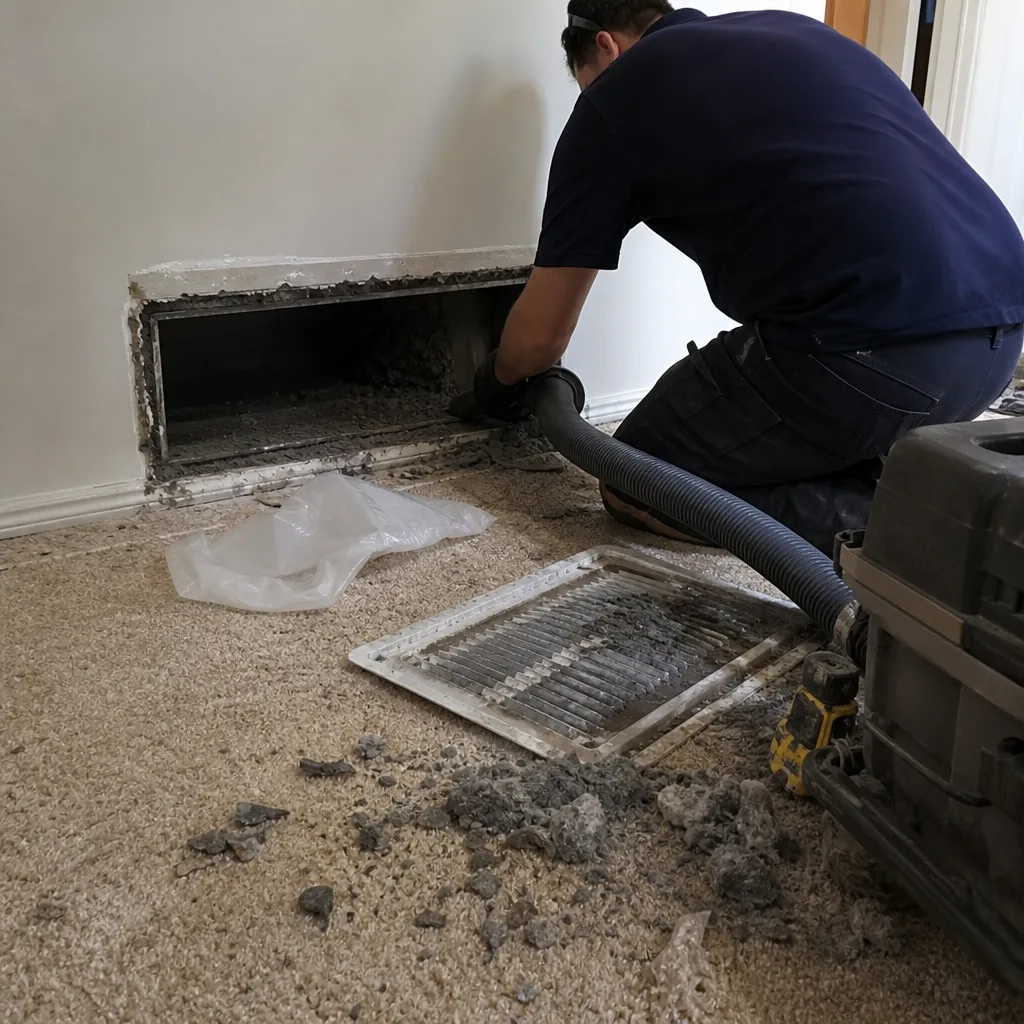 Before
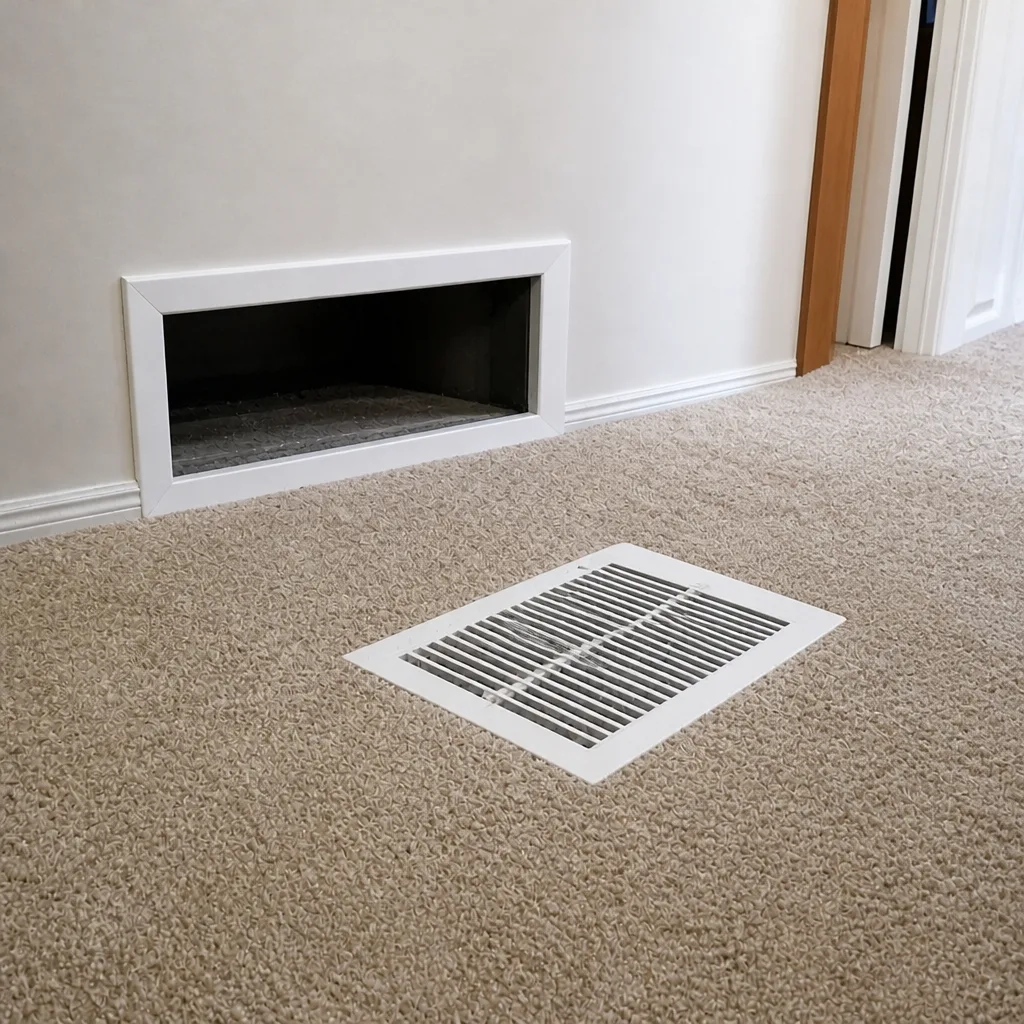 After
When to Call a Professional
There are cases where you should pick up the phone rather than wait for a scheduled visit. Any smoke infiltration event that pushed visible smoke into the house. Any water that reached ductwork, even if it looks dry now. Any fire soot, even a small contained one. Any evidence of rodent activity in the ducts. Any sudden increase in allergy or asthma symptoms after an event. And any time you smell something in the house that you can’t identify, because that’s usually the system pulling contamination out of the ducts and into the living space.
If the event was significant, don’t run the system to “see if it clears.” University Park Air Duct Cleaning Pros offers free estimates in University Park, and we can walk through the contamination type, the protocol, and a flat per-system price before any work starts. Call (855) 677-5998. We answer 24/7. Fast dispatch from 7am to 7pm, Sunday through Friday. A call outside dispatch hours gets booked into the next opening.
Frequently Asked Questions
Smoke remediation typically takes longer than routine air duct cleaning because it requires contact cleaning of each duct run, HEPA capture throughout, and a full sanitizing pass. The exact time depends on the size of the system and how much of it was infiltrated. A written estimate should give you the expected scope before the crew arrives.
No. Standard HVAC filters don’t capture ultrafine smoke particulate at the size that matters, and running the system distributes particulate into every room the ducts serve while also lodging it deeper into duct lining. Shut the system down, change the filter, and get an assessment before restarting.
Cleaning removes accumulated dust and debris. Remediation addresses a specific contamination event – smoke, soot, water, or rodent – with a protocol matched to that contamination type and equipment suited to it. Many companies offer cleaning and call it remediation. Ask what equipment they use for the contamination job, and ask whether they carry air scrubbing units for it.
Most homes benefit from a professional cleaning on a multi-year schedule, and contamination events reset that schedule entirely. If you’ve had a smoke event, water intrusion, or rodent discovery, you don’t wait for a routine interval. You address the contamination now and then resume the routine schedule. Homes with allergy or asthma concerns often want an annual IAQ check as well.
Usually because the scope is smaller than the contamination requires. A cheap quote may cover a surface vacuum pass without contact agitation, without HEPA-level capture, and without the sanitizing step. After a real contamination event, the work isn’t optional. One flat price per system, agreed before work starts, based on a written scope, is the honest way to price it. Call (855) 677-5998 for an exact quote – estimates are free.
Before-and-after photographs of your own system, taken inside the ducts, and a written scope that names the contamination type and treatment. If a contractor doesn’t provide either, the work isn’t documented, and you have no way to verify it. A legitimate remediation job also lists the equipment used, so you can see the difference between a shop vacuum and a Rotobrush contact system.
The Bottom Line
Emergency duct preparedness in University Park is a before-the-event project, not an after-the-event scramble. The four scenarios worth planning for – wildfire smoke, water intrusion, fire soot, and rodent discovery – each need a different protocol and different equipment. Document your system now, get a baseline air quality reading, pre-vet a contractor with real remediation-grade tools, and know your shutdown sequence. When something does happen, shut the system down, photograph everything, and call for an assessment instead of running the system to see if it clears. Then let one flat per-system price and before-and-after photos be the standard the job is held to.
The tools matter. So does knowing whether the contractor actually has them. We work with professional-grade equipment from Rotobrush, Nikro, and Abatement Technologies, and with HVAC cleaning done on the same visit, plus duct repair and sealing and air quality and sanitizing, one call covers the full lifecycle. That’s what a real emergency response looks like.
If you’re preparing in advance, or if you’re dealing with an event right now, we’re ready to walk through it with you. Call (855) 677-5998 for a free estimate. One flat price per system, agreed in writing before work begins, with before-and-after photos to show you exactly what was done. We answer 24/7. Fast dispatch from 7am to 7pm, Sunday through Friday.
Written by the team at University Park Air Duct Cleaning Pros.