
Top Signs You Need Air Duct Cleaning Service – Don’t Ignore These
Most homeowners wait for visible dust before they think about their ducts. That’s the late stage. By the time debris is shedding off the duct walls onto a register face, it’s been building inside the system for a while. The earlier and more precise signals show up somewhere you already look every month: your energy bill and your HVAC filter. Knowing what those signs feel like, in a University Park home, catches the problem long before you’d notice it by eye.
If you’d rather have a trained eye check it than guess, call (855) 677-5998. We’ll tell you straight whether your ducts need cleaning or whether you can safely leave them alone for now.
Key Takeaways
- Visible dust on registers is a late indicator, not an early one.
- A filter clogging in under three weeks is one of the strongest signs of a dirty duct system.
- Any remodel in a University Park home is a hard trigger for an inspection.
- Signs of mold, rodent activity, or a musty odor after the system runs call for remediation, not routine cleaning.
- Symptoms that flare specifically when the HVAC runs point to a system-sourced trigger.
Sign #1: Your Filter Clogs Way Too Fast
A filter that fills up in under three weeks is telling you something. Under normal conditions in a typical University Park home, a standard filter should last roughly one to three months before it needs changing. If yours looks like a gray felt pad in two weeks, the dust isn’t just coming from the room. It’s coming from inside the ducts and getting pulled back into the return side of your system.
Here’s the mechanism. Every time your blower runs, it draws air through the return ducts. Gaps at joints, poorly sealed boots, and old ductwork allow dust to settle on interior surfaces. Once that film builds up, the airflow lifts particles off the walls and drives them into your filter. Your filter becomes the last line of defense, working much harder than it should.
What to check before you conclude it’s the ducts:
- Whether a cheap, low-MERV filter is the actual problem (some filters just load fast).
- Whether the filter fits its slot properly or air is bypassing around the frame.
- Whether the fast clogging started after a remodel or a new pet.
When we inspect a University Park home with a short filter cycle, the camera usually finds a layer of settled debris along the main trunk that a filter never had a chance to catch. The fix isn’t a stockier filter. It’s air duct cleaning followed by sealing the leaks that let the dust in.
Sign #2: Rooms That Never Match Each Other
Uneven temperatures across a house can mean a lot of things: a bad thermostat, a zoned system with a stuck damper, or ducts that have lost their seal. In a University Park home with older ductwork, that last one is common. When dust and debris pile up in one run and air leaks out of another, one bedroom runs hot while another stays cold, and the system seems to work harder to no effect.
Things to rule out before assuming it’s the ducts:
- Sun exposure. A west-facing room in University Park will run hotter on a clear afternoon no matter what the ducts do.
- Furniture and curtains blocking the registers.
- A failing thermostat or a damper left in the wrong position.
If the room that always runs cold is also the one furthest from the air handler, and the register there barely pushes air, that’s a duct problem showing up as a comfort problem. The fix can be cleaning out a blocked branch and sealing the joints along the way, which we handle as part of HVAC cleaning. It’s a single visit to trace and correct, not a reason to keep moving a space heater from room to room.
Sign #3: The Bill Climbed and Nothing Else Changed
Rising utility costs with no change in habits deserve a real explanation. If you haven’t bought a new appliance, changed the thermostat setpoint, or added a space heater, and your bill jumps, the airflow path is a legitimate suspect. Dust-clogged ducts restrict airflow, and a restricted system runs longer to reach the same temperature. That extra runtime shows up on the bill before your eyes ever register dust.
One honest caveat. Utility bills move for a lot of reasons in University Park, and a clogged duct is only one of them. We’d rather you check the easy stuff first: the thermostat schedule, filter age, and any new appliance on the circuit. If all of that is clean and the bill still trends up, the ducts are worth inspecting.
There’s a physical side to this you can feel without a tool. If the airflow out of a register feels weaker than it did a year ago, put your hand there. Dust film acts like a lining on the inside of the duct and narrows the effective opening. Cleaning restores it. Sealing keeps it restored. We’re careful to say on every job that the estimate sets the final price, and the estimate comes after we’ve inspected, not before.
One note: a filter cycle that keeps shrinking after a cleaning usually points to a fresh leak somewhere in the system, and a technician who can tell you where it is saves you a second call.
Sign #4: Any Recent Remodel, Even a Small One
Construction dust is not household dust. Drywall dust, insulation fibers, and sanding particulates are denser, and they lodge in ductwork differently. They settle deep in the lower ribbing of a flex run and clump against joint sealant instead of blowing through. Once they set, room airflow doesn’t lift them out. That makes any remodel a hard trigger for inspection, even a job as small as a bathroom re-tile.
What to watch for after a renovation in a University Park home:
- Visible pale dust on the top of every horizontal surface after the contractor leaves. If it’s still showing up weeks later, it’s still in the system.
- Filter loading fast in the weeks after the project ends.
- A faint chalky or chemical smell from the registers.
A caution worth taking seriously: if the remodel touched ceilings or walls where the duct runs behind them, a quick visual inside a register won’t tell you much. It takes a camera in the trunk to see what settled behind the drywall. This is where professional-grade tools matter, which is why we carry Abatement Technologies equipment and Rotobrush contact-cleaning systems for exactly this kind of post-remodel work.
Sign #5: Symptoms That Flare When the Air Runs
You’ll hear a lot of people blame the outdoors for seasonal allergy symptoms. But there’s a specific pattern worth tracking: symptoms that get worse when the HVAC kicks on, not just at the same time of year as the pollen. If a family member feels worse indoors, in the same room, after the system has been running a while, that timing is a system-sourced trigger worth investigating before you write it off.
A practical way to check it without guessing:
- Note when symptoms start and stop, and write down what the HVAC was doing at that moment.
- Run the system with the windows closed for a day and see whether the symptom pattern tightens.
- Change the filter and see if that alone helps. If not, the contamination is upstream.
We treat this seriously without over-claiming. Air duct cleaning is not a medical treatment, and no filter replaces a conversation with an allergist. What we can do is remove what’s physically there and give you cleaner air to test against. A proper cleaning with Rotobrush and Nikro equipment, followed by a Guardsman treatment and a Honeywell or Aprilaire filter in place, gives you a real baseline to judge by.
Sign #6: When the Camera Sees What a Flashlight Can’t
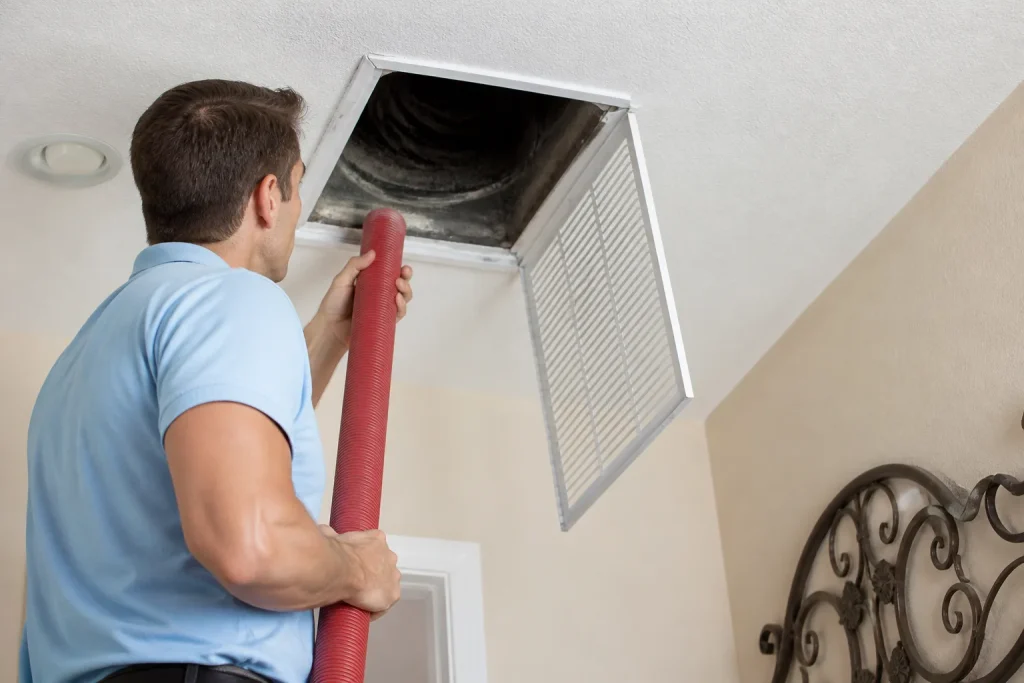
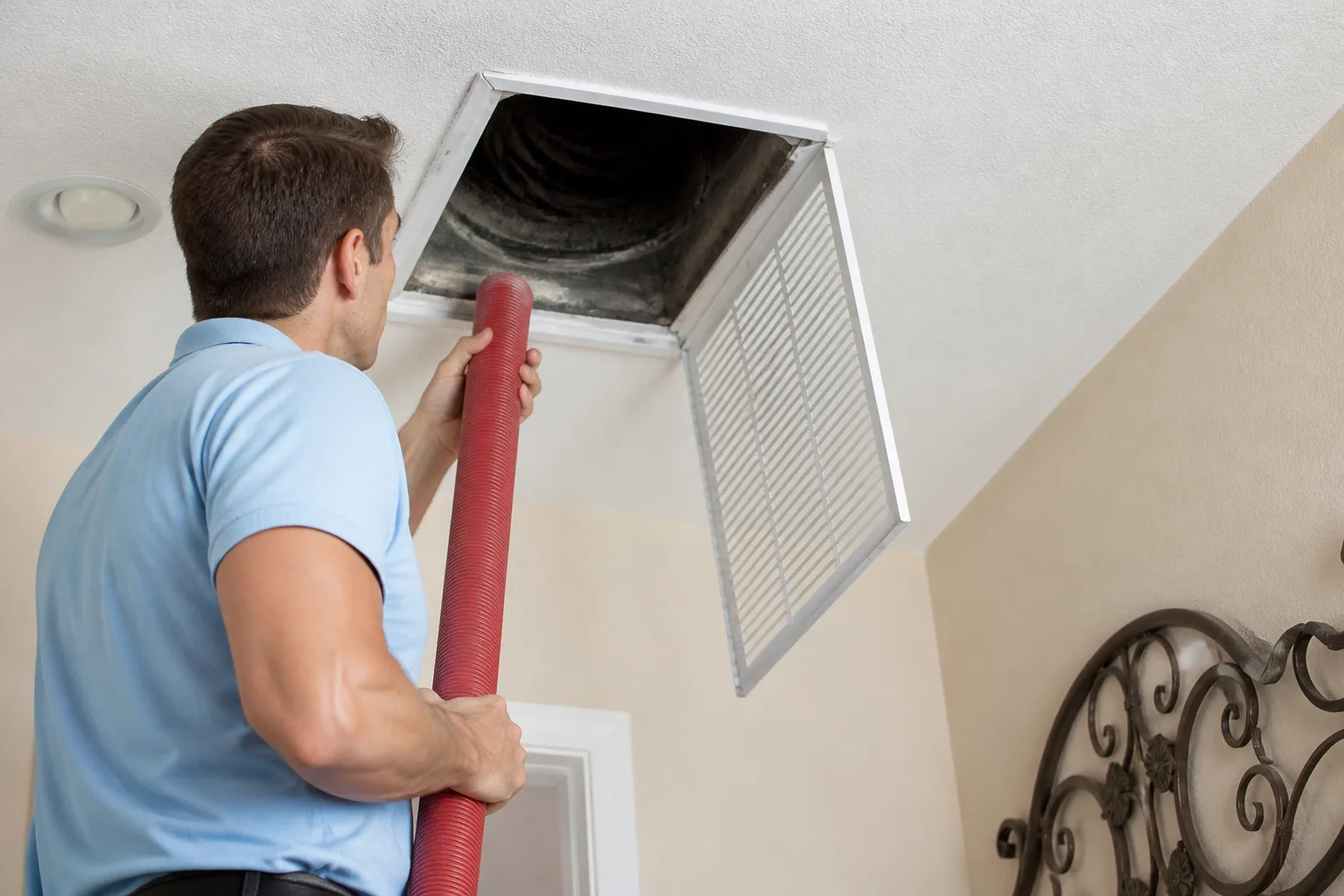
Here’s what you can see with a flashlight in University Park: the first two or three feet of a branch duct from the register opening, and the top surface of the main trunk if you can get an angle on it. That’s it. What you cannot see is the rest of the system, which is most of it.
What a camera inspection reveals differs in kind, not just degree. It shows the full length of the trunk, the return side behind the filter, the insides of the boots, and any junction where the duct reduces in diameter and collects debris. It also shows moisture staining, pest evidence, and the condition of the duct wall itself. A flashlight tells you the duct is dusty. A camera tells you whether the dust is sitting on intact metal or on a failing liner that needs repair before it needs cleaning.
That’s also how we avoid selling you a job you don’t need. The trained eye is the only reliable diagnostic tool for contamination scope, and University Park Air Duct Cleaning Pros use it on every inspection. Full-lifecycle work means cleaning, sealing, and sanitizing in one visit instead of three contractors across three weeks.
Cleaning vs. Remediation: These Aren’t the Same Job
Routine duct cleaning handles dust and normal accumulation. Remediation handles contamination. The signs point to different work, and confusing them wastes time and money. Treat these as the red flags that change the scope entirely:
- Visible mold growth inside ducts, at boots, or around the air handler. Mold requires moisture control alongside cleaning, and a plain vacuum pass won’t fix the source.
- A musty odor that appears only after the system runs. If the smell is strongest when the blower is on and fades when it stops, the source is in the airflow path, not the room.
- Rodent evidence in the ducts, at registers, or in the return cavity. Droppings and nesting material call for a different protocol, and the entry point needs sealing, not just cleaning.
This is where equipment separates crews. A standard residential vacuum is not built for contamination scenarios. Abatement Technologies filtration and a Rotobrush contact-cleaning pass are, and they’re what we carry for exactly these situations. If any of the three above is present in your University Park home, call us first rather than treating it as a routine cleaning.
Your Dryer Vent Belongs in the Same Conversation
One overlooked topic while we’re on the subject of system-sourced risks: the dryer vent. Lint accumulation in a blocked or crimped dryer line is a documented fire risk, and it doesn’t show up in your energy bill or your filter. It shows up in dry times climbing steadily, a dryer that runs hot, or a load that still feels damp at the end of a normal cycle. We handle dryer vent cleaning as a standalone safety service, not as an add-on afterthought. If any of the signs above lead you to call, ask about the vent in the same visit.
When to Call a Pro
If you’ve checked the filter fit, the thermostat schedule, and the easy stuff, and those signs still line up, that’s when the camera comes out. We answer 24/7. Fast dispatch from 7am to 7pm, Sunday through Friday. The estimate is free, the price is set per job by the written estimate, and we don’t quote per-vent figures over the phone. Our technicians have up to 11 years of experience, and the local pro we connect you with is licensed and insured as their state requires.
If you’re in University Park and want a straight answer on whether your ducts need work, call (855) 677-5998 and we’ll schedule an inspection.
The Bottom Line
The most actionable signs of dirty ducts are performance signals, not visual ones. A filter that clogs in under three weeks, uneven rooms, or a rising bill with no other changes are telling you what the inside of your system looks like long before dust shows up on a register. Add a recent remodel, symptoms that flare when the air runs, or any sign of mold, odor, or rodents, and it’s time for a camera inspection. Cleaning restores airflow. Sealing keeps it that way. Sanitizing, with a Guardsman treatment, goes beyond what a vacuum pass can do.
If you’re in University Park and need help, University Park Air Duct Cleaning Pros offers free estimates. We handle cleaning, sealing, sanitizing, and dryer vent work in a single visit. Call (855) 677-5998. We answer 24/7. Fast dispatch from 7am to 7pm, Sunday through Friday.
Frequently Asked Questions
Check your filter cycle time, your utility trend, and room temperature spread before you check your registers. A filter clogging in under three weeks, uneven room temps, or a rising bill with no other changes are stronger signals than visible dust. A camera inspection is the only reliable confirmation; call (855) 677-5998 for a free estimate.
No, dust on registers is a late indicator. By the time debris is shedding onto a register face, it’s been accumulating for a while. Energy usage and filter cycling are earlier and more precise signals.
Any remodel is a hard trigger for inspection. Drywall dust and insulation fibers are denser than household dust and settle deep in ductwork where room airflow can’t lift them out. Call (855) 677-5998 and we’ll recommend a camera inspection rather than a guess.
Cleaning handles dust and normal accumulation. Remediation handles visible mold growth, musty odors that appear only when the system runs, or rodent evidence, and each one requires a different scope of work. If any of those apply in your University Park home, call (855) 677-5998 before scheduling routine cleaning.
Written by the team at University Park Air Duct Cleaning Pros.
Need Air Duct Cleaning Help?
Call University Park Air Duct Cleaning Pros - the local pro we connect you with is licensed and insured, with free written estimates in University Park.
(855) 677-5998