
Air Duct Cleaning: Repair or Replace? How University Park Homeowners Decide
Most University Park homeowners ask the wrong question first. They want to know whether cleaning or replacement is “better,” as if one answer fits every house on the block. The real deciding factor is air leakage, not the age of the system and not how dirty the ducts look. A duct system with heavy surface dust but tight seams can usually be restored with a thorough cleaning. A system with a serious leakage rate loses efficiency that no amount of cleaning will recover. One diagnostic test answers the question. If you’d rather have that test run by someone who does it every week, call (855) 677-5998.
Why “How Old Is My Ductwork?” Is the Wrong First Question
Age tells you what materials are likely in the walls. It doesn’t tell you whether those materials are still doing their job. Two homes of the same vintage in University Park can have completely different duct conditions: one sealed and clean, the other leaky and full of particulate. Judging by the calendar gets homeowners into trouble in both directions.
We’ve seen plenty of 25-year-old duct systems that were still airtight, and we’ve seen much younger systems with disconnected trunk lines and collapsed flex runs. The condition of the ductwork matters more than the year it went in.
The practical rule:
- Clean when the ducts are structurally sound and the problem is what’s sitting on the walls of the ducts.
- Replace when the ducts themselves are broken, disconnected, or built in a way that will always cause pressure problems.
- Repair and seal when both are true: the ducts are dirty and the ducts are leaking.
That third option is the one most homeowners never hear about, and it’s often the right answer. We’ll get to it below.
What a Duct Leakage Test Actually Tells You
A duct leakage test measures how much air escapes the system before it ever reaches a room. It’s the diagnostic tool that actually answers the repair-versus-replace question, and it’s not the same as a visual inspection.
Here’s how the test works in general terms. A technician pressurizes the duct system with a calibrated fan and measures how much air has to be pushed in to hold a set pressure. The result is a leakage figure, not a guess. Combined with a blower door test on the house itself, you get a real picture of how much conditioned air is being lost to the attic, crawlspace, or wall cavities.
Why it matters in University Park: our climate swings hard between seasons. A system that leaks into an unconditioned attic during a cold snap is throwing away heat you’re paying for, and no amount of cleaning changes that. Cleaning makes the inside of the ducts healthier. Testing tells you whether the ducts are containing that air in the first place.
Visual inspection has its place. It catches obvious damage, disconnected flex runs, and visible moisture. But it cannot measure leakage, and University Park homeowners deserve a number, not an opinion.
The Conditions That Make Cleaning the Right Answer
Cleaning is the right call when the ducts are intact and the problem is contamination, not structure. The specifics:
- Seals are intact. The duct runs hold pressure. There’s no obvious leakage at the joints or plenums.
- No structural damage. No crushed flex runs, no sagging runs, no ducts that have come apart at the seams.
- No active mold colonization. Surface dust is one thing. Embedded biological growth in the duct lining is a different problem and may call for remediation rather than routine cleaning.
- Contamination is surface-level particulate. Dust, debris, pet hair, and construction dust from a recent renovation are all addressable with a thorough contact cleaning.
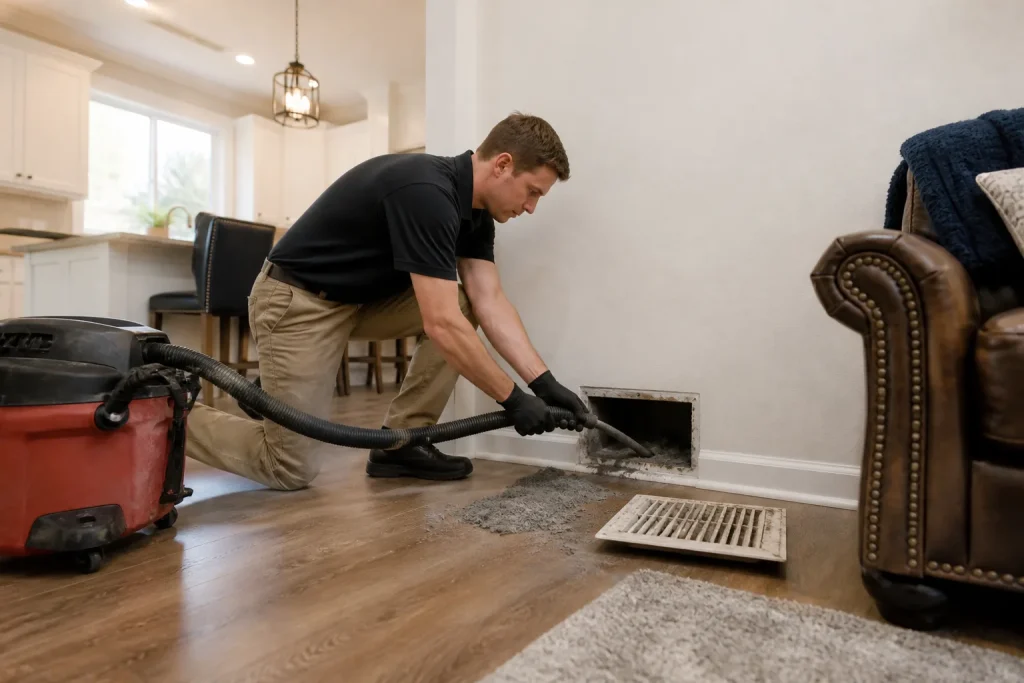
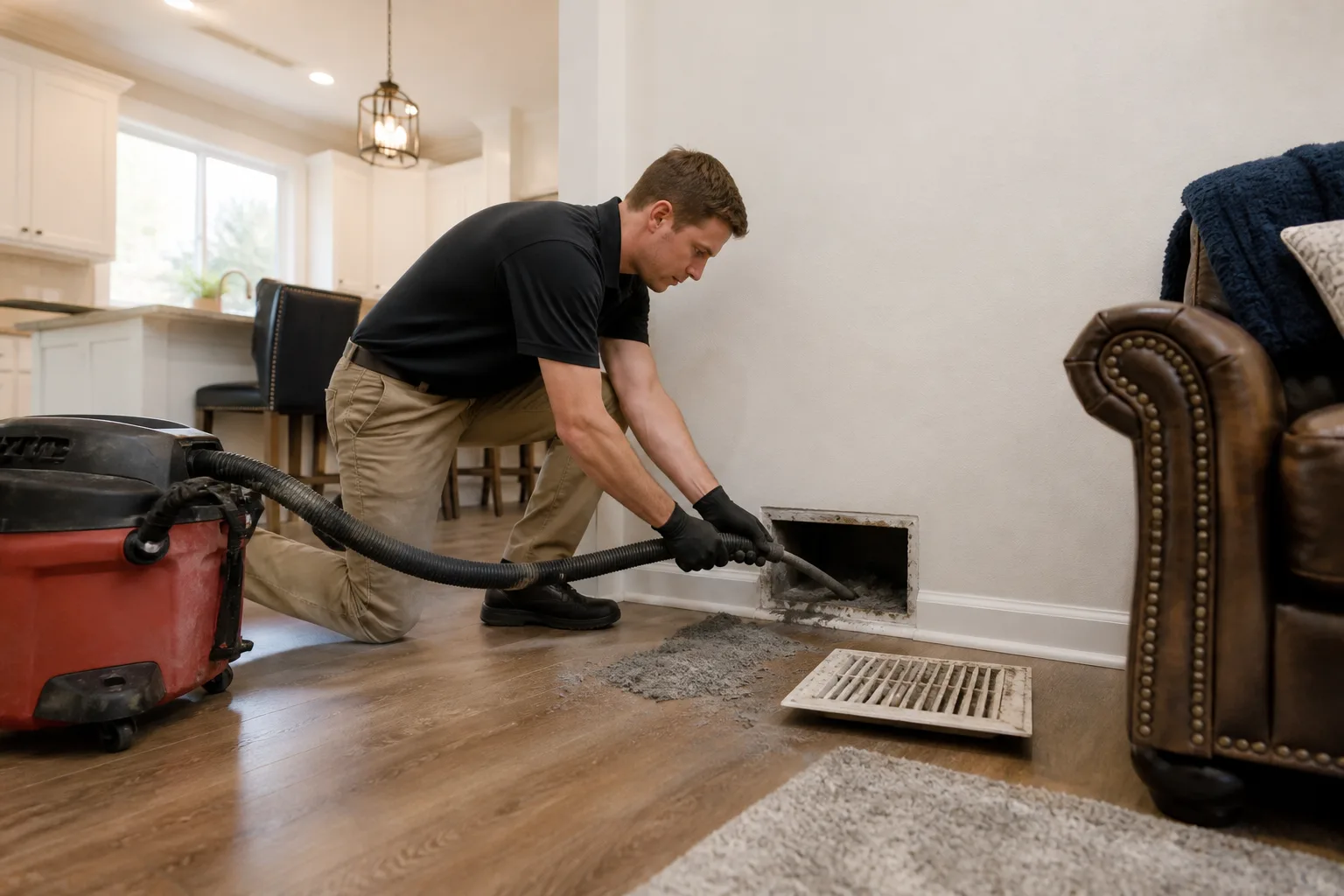
When those four conditions hold, cleaning restores the system. That’s where professional-grade equipment matters. Rotobrush contact-cleaning systems and Nikro professional HVAC equipment are the same tools remediation contractors use, and they clean the walls of the ducts rather than just blowing dust around inside the system. Most entry-level residential vacuums can’t match that.
A routine air duct cleaning addresses contamination at the source, which is why it’s the right starting point for a lot of University Park homes.
The Conditions That Point to Replacement
Replacement makes sense when the ductwork itself is the problem, not what’s inside it. Look for these signs:
- Collapsed flex duct sections. If a run has crushed down to a fraction of its intended diameter, air can’t move through it and no cleaning restores the shape.
- Disconnected trunk lines. When the main trunk has come apart at a joint, the system is dumping conditioned air somewhere it shouldn’t be. Sealing a properly connected trunk is one thing; sealing a disconnected one is not a cleaning job.
- Asbestos-wrapped ductwork in pre-1980 homes. If a University Park home has older ducts wrapped in material that may contain asbestos, that’s a safety issue that needs to be handled by a qualified abatement professional before anyone cleans or replaces anything. We don’t guess on this. It’s a stop sign.
- Duct layouts that create chronic static pressure problems. Bad design is bad design. If the system was built in a way that starves certain rooms of airflow no matter how clean the ducts are, sealing and cleaning won’t fix the geometry. Redesign is the only real answer.
This is where the age question actually earns its keep. Older materials and older designs are worth a closer look, not because age determines the answer, but because age correlates with the problems that make replacement the right call.
The Middle Path: Sealing and Cleaning Together
Here’s the option most University Park homeowners don’t hear about. Duct sealing combined with cleaning addresses both contamination and leakage without tearing out the whole system. It’s the right answer for a large number of homes, and it costs far less than a full replacement.
Sealing is done two ways: with Aeroseal-style internal sealing systems that coat the inside of the duct from within, or with mastic applied at the joints by hand. Each has its place. Mastic targets specific joints and is straightforward on accessible runs. Internal sealing reaches leaks you can’t see or reach. A trained technician can tell you which your system needs.
The sequence matters. You clean first, then seal. Sealing over dirty ducts traps the contamination inside. Cleaning first gives the sealant a clean surface to bond to.
Combine that with sanitizing and you get the full picture of what HVAC cleaning can do for a system that’s still structurally sound. Our technicians have up to 11 years of experience with these methods, and the equipment we use is built for the job: Rotobrush, Nikro, and Abatement Technologies air filtration tools for serious contamination scenarios.
A Decision Framework You Can Use Before the Service Call
You don’t need to know the answer before the technician arrives, but arriving with evidence helps. Here’s what we’d suggest jotting down:
- Home age and duct material. Pre-1980 homes warrant a closer look at insulation wrapping. Newer homes with flex duct are more likely to have collapsed runs than a leakage problem.
- Last HVAC service record. When was the system last serviced, and did the technician mention airflow issues? That’s a useful clue.
- Current energy bills. Rising bills with no change in usage habits can point to leakage. A sudden jump is worth investigating before you blame the furnace.
- Any water events. A past leak, a flooded crawlspace, or high humidity in the duct location is a flag for moisture problems. That changes the conversation from cleaning to remediation.
Bring those four things to the call. The technician can use them alongside a duct leakage test to give you a clear answer rather than a sales pitch.
When to Call a Pro
This is the part where we’re honest about where DIY ends. Duct leakage testing requires calibrated equipment and a working knowledge of how to interpret the numbers. Duct sealing is straightforward in concept but requires the right materials and technique. And any suspicion of asbestos or active mold means calling a qualified professional, not spraying something on it. If you’re in University Park and the question is still open, that’s exactly the call to make.
Related services in University Park: if your dryer vent is also overdue, schedule dryer vent cleaning while you’re at it. A clogged dryer vent is a documented fire risk and often gets skipped in a routine HVAC service.
The Bottom Line
The question isn’t whether to clean or replace. It’s whether your ducts are leaking. A duct leakage test answers that. Cleaning restores a sound, dirty system. Replacement is right when the ducts themselves are broken, disconnected, or badly designed. And sealing plus cleaning is the middle path that solves both problems for a lot of University Park homes. Stay skeptical of anyone who skips the test and jumps straight to a quote for new ductwork, and equally skeptical of anyone who cleans without checking whether the ducts are actually holding air.
If you’re in University Park and need help, University Park Air Duct Cleaning Pros offers free estimates. Call (855) 677-5998. We answer 24/7. Fast dispatch from 7am to 7pm, Sunday through Friday. One flat price per system, agreed before work starts, and before-and-after photos of your own ducts so you can see what was actually done.
Frequently Asked Questions
Most residential jobs fall in a wide range depending on the number of vents, the length of the runs, and how much contamination is present. You get a flat price per system set by a written estimate before any work begins. There’s no per-vent pricing and no bait-and-switch coupon that grows into a bigger invoice once the technician is on site. Call (855) 677-5998 for an exact quote. Estimates are free, and we answer 24/7.
A duct leakage test tells you. If the ducts hold air and the problem is surface contamination, cleaning is usually the right answer. If runs are collapsed, the trunk is disconnected, or the layout creates chronic pressure problems, replacement enters the conversation. Asbestos-wrapped ducts in pre-1980 homes require a qualified abatement professional before anything else happens. In University Park, you can call (855) 677-5998 and we’ll walk you through the diagnostic. The estimate is free.
Cheap quotes usually skip the contact cleaning and the structural check. Professional-grade equipment like Rotobrush and Nikro systems actually scrubs the walls of the ducts, which takes more time and a better tool than a shop vacuum. We give you one flat price for the whole system and before-and-after photos of your own ducts so you can see the difference. Call (855) 677-5998. Estimates are free.
There’s no fixed schedule that fits every house. Homes with pets, recent renovations, allergy or asthma concerns, or older ductwork tend to benefit sooner than newer, well-sealed systems. A leaking system needs sealing before cleaning actually pays off, which is why we test first. Call (855) 677-5998. We answer 24/7, and fast dispatch runs from 7am to 7pm, Sunday through Friday. If you’re wondering if it’s time in your University Park home, a free estimate is the right first call.
Written by the team at University Park Air Duct Cleaning Pros.
Need Air Duct Cleaning Help?
Call University Park Air Duct Cleaning Pros - the local pro we connect you with is licensed and insured, with free written estimates in University Park.
(855) 677-5998