
Rotobrush Air Duct Cleaning in University Park: A Homeowner’s Guide
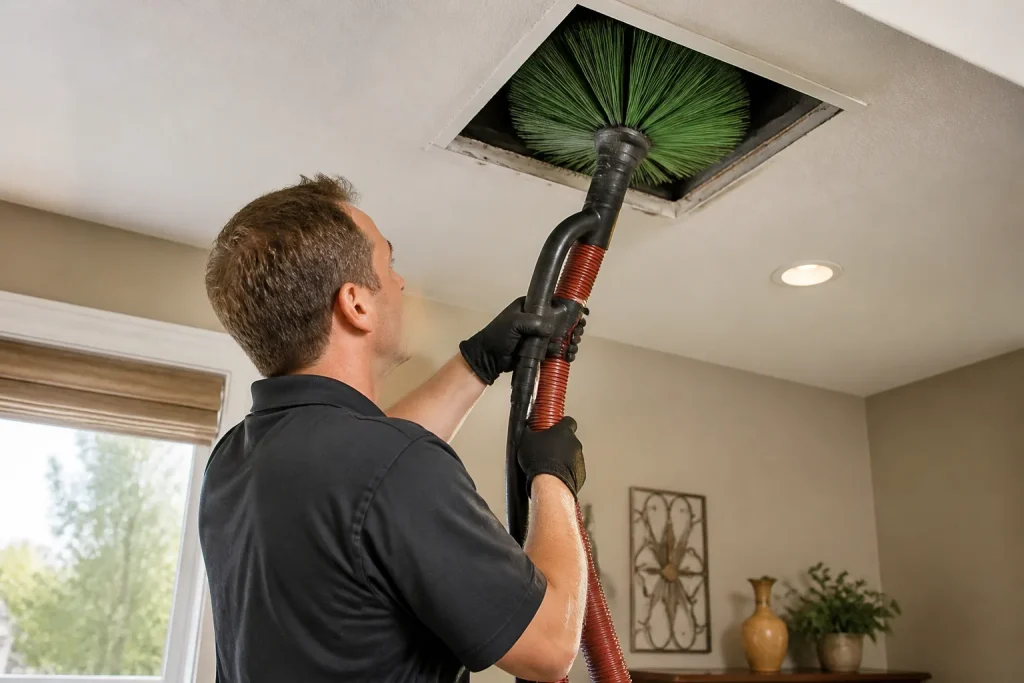
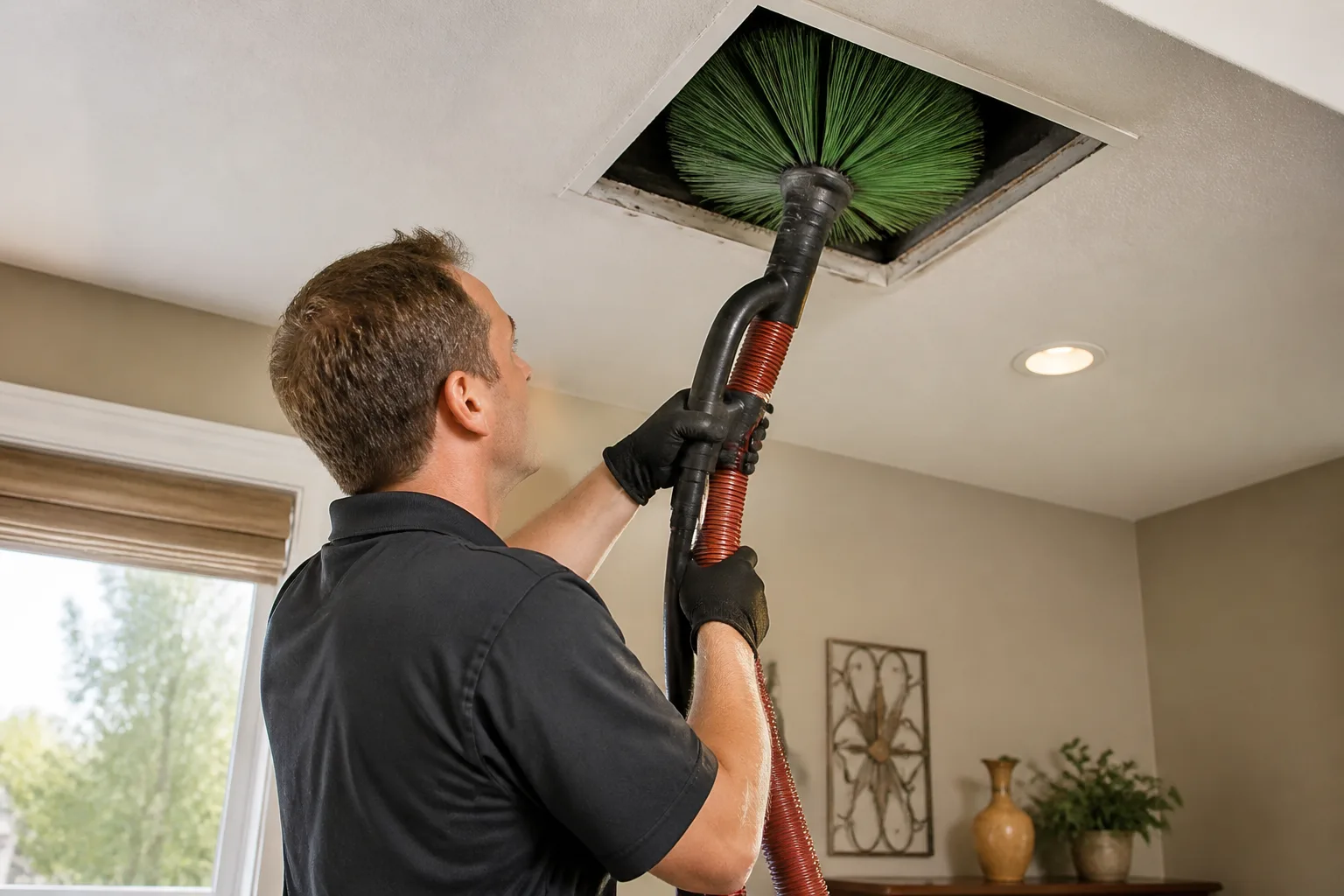
Most homeowners in University Park who ask about Rotobrush are really asking one thing: is this a real cleaning method or a name slapped on a sticker? Here’s the short answer. Rotobrush is a contact-cleaning system that puts a rotating brush inside a continuous HEPA vacuum sleeve, so debris gets scraped loose and captured in the same motion instead of floating through the duct. That single design detail changes how a job is done, and it’s worth understanding before you book anything.
If you’d rather have a specialist walk you through it, call (855) 677-5998 and we’ll talk it through. Otherwise, read on. This guide covers what the tool actually does, where it wins, and where it doesn’t.
How does a Rotobrush system actually work?
A Rotobrush spins a brush head against the duct wall while a HEPA-filtered vacuum pulls air through the same housing, so loosened dust, drywall grit and settled debris enter the airstream and land in the collection container rather than escaping into the room. The brush rotation and the suction happen in the same pass, at the same point on the duct wall, which is the whole idea.
Compare that to older push-pull negative pressure. A big vacuum on the main trunk creates suction through the whole system, but it rarely reaches the corners of a branch run and it doesn’t break the bond between caked dust and sheet metal. Fine particles shake loose and settle again. In our experience, that’s why two “duct cleanings” can produce very different results depending on what was actually used.
A few mechanical points worth knowing when you’re evaluating a quote in University Park:
- Contact, not just airflow. The brush physically agitates the surface. Suction alone doesn’t do that.
- HEPA capture on the same tool. Debris goes into the vacuum, not the living room. That matters in occupied homes.
- Variable brush sizing. Different duct diameters need different heads. A brush that’s too big or too small either binds or skips the walls.
- Continuous vacuum. The machine runs a filter the entire time the brush is working, so nothing settles back in the run you just cleaned.
We run Rotobrush and Nikro equipment because that pairing handles the contact work well and keeps filtration honest. Professional-grade equipment, residential pricing – that’s the standard we hold ourselves to in University Park.
Where does Rotobrush excel and where is trunk-line negative pressure better?
Rotobrush contact cleaning is the better tool for flex duct runs, smaller residential layouts, and branch lines that are partially blocked or have settled debris caked into the ribs. Trunk-line negative pressure is generally more effective on large-diameter main trunks and long straight sheet-metal runs, and in many University Park homes we use both on the same job.
Here’s the breakdown you won’t usually get from a coupon flyer:
- Flex duct: Rotobrush wins. Flex has ridges where dust collects and where a low-suction tool can’t reach. The brush follows the ribbing.
- Short residential branch runs: Rotobrush wins. Contact cleaning is faster and more thorough on shorter distances than trying to pull air through a small opening.
- Partially obstructed branch lines: Rotobrush wins, with camera verification after. A brush can physically clear what suction can’t move.
- Large sheet-metal trunks: Negative pressure is often the better first step. High volume, wide surface, no ribs to scrub.
- Heavily contaminated plenums and coil areas: Usually a combination, plus Abatement Technologies filtration when debris or contaminants warrant it.
No single tool is the right answer for every configuration. A University Park home built in the last couple of decades with flex runs in the attic is a different job from an older home with a long rigid trunk. A good technician tells you which is which instead of pretending one tool does everything.
Is every rotating brush system “Rotobrush”?
No. A lot of the brush-and-vac equipment marketed for residential duct cleaning looks similar from the outside but doesn’t have the same HEPA-rated capture, the same variable brush sizing, or the same continuous vacuum housing. Rotobrush is a specific system, and the knockoffs don’t behave the same way in a duct.
When you’re comparing quotes in University Park, these are the questions that separate the real thing from the lookalike:
- What brand of equipment is used, and can they name the model family?
- Is the vacuum HEPA-rated, or just “high suction”?
- Do they carry multiple brush sizes for different duct diameters?
- Do they use a camera to verify before and after?
- Do they offer repair, sealing and sanitizing if they find damage?
That last point matters more than most homeowners realize. Clean ducts are only half the job. A cracked or disconnected flex run will let dust back in the moment the system kicks on, so a cleaning crew that can’t also handle duct repair and sealing leaves you with a clean house and the same problem next month. We handle cleaning, repair and sealing, and sanitizing in one visit for exactly that reason.
What does a Rotobrush service visit look like, start to finish?
A typical Rotobrush visit in University Park runs four stages: access point selection, matched brush sizing per duct diameter, camera verification, and filter replacement at completion. Every stage has a reason, and none of them should be skipped.
1. Access point selection
The technician maps the system first, then cuts or uses existing access points so the brush can reach each branch and the main trunk. Poor access is the number one reason a duct cleaning misses the run that actually needed attention.
2. Brush sizing per duct diameter
Each run gets a brush that matches its diameter. Too large and it binds; too small and it misses the walls. This is also where flex duct gets treated carefully, since over-aggressive brushing can damage the liner.
3. Camera verification
Before and after. A camera looks down the run so the technician can show you what was found, what was removed, and whether anything (a torn liner, a disconnected joint) needs repair. We bring Abatement Technologies filtration on jobs where contamination or post-renovation debris is a concern.
4. Filter and component check at completion
The blower compartment and filter area get cleaned and the filter gets replaced or flagged for replacement. If your home uses a Honeywell or Aprilaire filtration system, that’s the moment to talk about whether the filter in place is the right one for the job. Clean ducts feeding through a neglected filter is a wasted effort.
What results should you actually expect to see after Rotobrush cleaning?
You should expect measurable improvement in airflow at registers and a clear drop in airborne particulate readings, but not a dramatic plume of visible dust leaving the vents – because the whole point of the tool is that debris never floats in the first place. What you’ll notice is subtler and more useful.
- Before/after airflow readings at registers. A hand-held meter at each vent shows whether airflow improved where it was restricted. Not every register changes; the ones feeding blocked runs do.
- Particulate meter results. A particle counter before and after shows the real story. Post-cleaning, particle counts in the airstream should be lower and the dust that returns should accumulate more slowly.
- Camera stills. Before-and-after photos of your own ducts, not stock images. That’s the most honest proof you can get.
- Filter loading. Your filter should stay cleaner longer after a thorough cleaning. That’s a good sign the runs you paid to clean are actually clear.
What you shouldn’t expect to see is a magic change if the real problem is a leaking return or a disconnected joint. Those get fixed with duct repair and sealing, not more cleaning. Knowing the difference is the whole reason we do the camera pass.
Why are some duct cleaning quotes so much cheaper in University Park?
Cheap duct cleaning quotes are usually cheap because the job is short: a quick negative-pressure pass on the main trunk without contact cleaning, no access beyond what’s already there, no camera check, no filter work. That’s not necessarily dishonest, but it isn’t the same service as a full Rotobrush contact clean with verification.
Before you book, ask yourself whether the scope fits what you actually need:
- Does the quote cover contact cleaning or just a vacuum pass?
- Is the price per whole system, or per vent once the technician is on site?
- Will you get before-and-after photos of your own ducts?
- Is repair and sealing available if a problem turns up?
- Is sanitizing offered, and is it a real treatment (Guardsman) or a spray with no follow-through?
We quote one flat price per system agreed before work starts, with no per-vent pricing added mid-job and with before-and-after photos of your own system at the end. No teaser numbers that balloon once the truck is in the driveway.
When to call a pro: if your home has visible dust at supply registers, allergy symptoms that get worse when the HVAC runs, recent renovation dust, or a dryer that takes longer than it used to, it’s worth a conversation. Health-conscious households in University Park with asthma or allergy concerns should prioritize a job done thoroughly over one done cheaply.
Related services in University Park: air duct cleaning, dryer vent cleaning, and HVAC cleaning. If you want the whole picture on the company, that’s on our main page for University Park Air Duct Cleaning Pros.
And yes, the dryer vent deserves its own paragraph. It’s a real fire hazard, most HVAC companies skip it entirely, and it’s a standalone service we offer because it matters.
The Bottom Line
Rotobrush is a real methodology, not a marketing sticker. It’s the right tool for flex runs, small residential systems and partially blocked branch lines, and it pairs with trunk-line negative pressure on the larger main runs. The difference between a good Rotobrush job and a cheap one is mostly in what happens around the brush: access, sizing, camera verification, repair, sealing, filter work, and honest before/after proof.
Our technicians have up to 11 years of experience and work with Rotobrush and Nikro equipment, plus Abatement Technologies filtration and Honeywell and Aprilaire IAQ products when a home needs more than a clean. One call covers cleaning, sealing, and sanitizing.
If you’re in University Park and need help, University Park Air Duct Cleaning Pros offers free estimates. Call (855) 677-5998. We answer 24/7. Fast dispatch from 7am to 7pm, Sunday through Friday. Estimates are free and the price is set per job by the written estimate.
Frequently Asked Questions
Rotobrush-based duct cleaning is usually priced as a whole-system job, not per vent, and the final price is set by a written estimate after a technician sees the layout. Smaller homes with simple flex runs land at the lower end; larger systems with multiple trunks, added repair or sanitizing land higher. Call (855) 677-5998 for an exact quote – estimates are free.
Because the scope is usually smaller: no contact cleaning, no camera verification, no filter work, and per-vent pricing that grows once the technician is on site. A cheap pass through the main trunk isn’t the same as a Rotobrush contact clean across every branch. Ask for a written scope and before-and-after photos, then compare. Call (855) 677-5998 for a free estimate with a clear scope.
You should see before-and-after camera photos of your own ducts and airflow readings at the registers, plus a filter check at the end of the visit. A crew that can’t show you those is asking you to take it on faith. Call (855) 677-5998 to book a visit with documented results.
Most homes in University Park do fine with cleaning every few years, but the interval shortens with pets, recent renovation, allergy or asthma concerns, or a home with visible dust at the registers. If you’re unsure, a camera check tells you more than a calendar does. Call (855) 677-5998 – estimates are free.
Written by the team at University Park Air Duct Cleaning Pros.
Need Air Duct Cleaning Help?
Call University Park Air Duct Cleaning Pros - the local pro we connect you with is licensed and insured, with free written estimates in University Park.
(855) 677-5998